
Composite story
NASA launches Nancy Grace Roman Space Telescope on Falcon Heavy
Cape Canaveral, FloridaPublished 31 Aug 2026
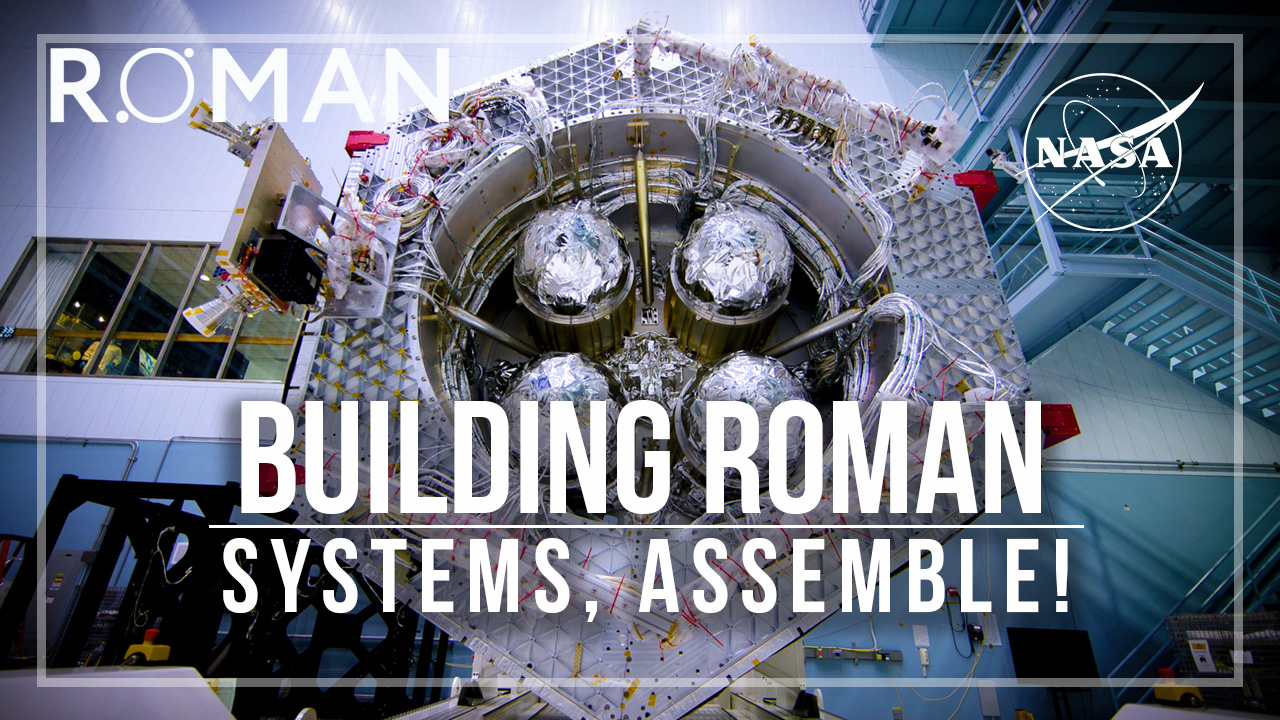
NASA's Scientific Visualization Studio - eMITS/Scott Wiessinger, Advocates in Manpower Management, Inc./Sophia Roberts, ASRC Federal/Jolearra Tshiteya, University of Maryland College Park/Francis Reddy / Wikimedia Commons, Public domain · source
The $4.3 billion Hubble-class survey telescope lifted off from Florida, headed for Lagrange Point 2 with a 300-megapixel camera and a repurposed spy-satellite mirror.
NASA launched the Nancy Grace Roman Space Telescope on a SpaceX Falcon Heavy from Kennedy Space Center on Aug. 30. The $4.3 billion infrared survey mission, named for NASA’s first chief astronomer, will travel about a million miles to Earth-sun L2 to map dark energy, dark matter, and exoplanets with a field of view about 100 times Hubble’s.
Disputed opinions
 None yet.
NASA launches $4.3bn Roman Telescope to uncover universe’s hidden secrets
Published 30 Aug 2026 accessed 31 Aug 2026
Facts
The telescope is designed to be refueled.
A robotic tanker in the coming decade could extend Roman’s life.
Ordinary matter is perhaps 5 percent of the universe.
Dark matter may represent about 27 percent.
Dark energy may represent about 68 percent.
The launch was nearly a year ahead of schedule.
The mission launched within budget.
Roman is NASA’s first space telescope named after a woman.
Hubble, Webb and Roman are described as a cosmic trio joining forces.
Roman joined NASA in 1959.
Webb observations found the earliest galaxies formed sooner and grew larger than previously thought.
Once Roman spots new worlds, Webb is expected to analyze their details.
Opinion
Ed Weiler said naming the telescope for Roman was long overdue.
Fox said Hubble and Webb peered through a keyhole while Roman will kick the door down.
'A giant leap forward': Nasa launches powerful new space telescope
Published 30 Aug 2026 accessed 31 Aug 2026
Facts
Nasa says Roman’s field of vision is 100 times larger than both Hubble and James Webb.
Millard said scientists hope to create enormous cosmic maps of the universe at various stages.
Roman was Nasa’s first female executive.
Opinion
No opinion marked.
NASA launches its Roman Space Telescope to explore the hidden universe
Published 30 Aug 2026 accessed 31 Aug 2026
Facts
Trump said he is supplying the team all that money.
The three cores throttled up to more than five million pounds of thrust from Pad 39A at Kennedy Space Center.
Isaacman began a reply to the president.
The second stage fired twice to reach the required trajectory.
If it works, a future telescope could image Earth-like planets and look for chemical signs of life.
The coronagraph is about the size of a baby grand piano.
Opinion
No opinion marked.
NASA launches its next-generation space telescope
Published 30 Aug 2026 accessed 31 Aug 2026
Facts
The observatory reached the speed of sound within one minute and 62 miles altitude in under five minutes.
The rocket emitted a massive plume of smoke as it soared into the sky.
Neil deGrasse Tyson said the nature of dark matter and dark energy are longest-standing mysteries.
It launched nine months ahead of schedule.
It has been under development for nearly two decades.
Teams had to navigate the Covid pandemic and two of the longest U.S. government shutdowns.
The largest survey will last over a year and peer through the Milky Way’s galactic bulge.
NASA named the telescope after her in 2020.
Earth’s atmosphere absorbs some wavelengths, so space telescopes see more clearly.
Opinion
No opinion marked.
'A glorious dawn launch': NASA's newest space telescope has left the Earth
Published 30 Aug 2026 accessed 31 Aug 2026
Facts
It was initially designed as an NRO spy telescope and donated to NASA.
Jared Isaacman said Goddard was receiving telemetry and all systems were nominal.
Understanding of dark energy comes from Type Ia supernova observations.
The telescope also hopes to find some 1,000 exoplanets through microlensing.
Opinion
No opinion marked.
Falcon Heavy launches NASA’s Roman Space Telescope
Published 30 Aug 2026 accessed 31 Aug 2026
Facts
It was Falcon Heavy’s third NASA mission, after Psyche in October 2023 and Europa Clipper a year later.
Townsend said Roman should be ready for early science operations at the 90-day mark.
In Trump’s first term, NASA budget requests for fiscal 2019 through 2021 proposed canceling WFIRST.
Course-correction burns were planned a day after launch and three days later, and might be reduced or skipped.
Congress rejected those proposals and appropriated full funding.
The fiscal 2026 NASA request also proposed a significant cut after OMB targeted Roman for cancellation.
The spacecraft was nearly complete and ahead of schedule.
Isaacman emphasized support from Trump when asked what changed from past budget cuts.
Isaacman said the call sounded like maybe even more resources.
Data will be downlinked to ground stations in New Mexico, Australia and Japan.
The coronagraph is a technology demonstration with 2,000 hours in the first 18 months.
Roman published a 1959 paper concluding direct planet observation was then impossible.
Opinion
McEnery said it could mean gravity on very large scales is not well described by general relativity.
Lucas Paganini said they are about to discover what the universe is made of.
Vanessa Bailey compared spotting an exoplanet to seeing a firefly next to a lighthouse from hundreds of kilometers.
SpaceX launches NASA's Roman Space Telescope on Falcon Heavy rocket
Published 30 Aug 2026 accessed 31 Aug 2026
Facts
NASA has said Roman images will be so vast no 4K TV on Earth can show them all.
Space.com said Falcon Heavy roared with 21 Merlin 1D engines at LC-39A.
Space.com put development at more than a decade and $4 billion.
Main-engine cutoff and stage separation were about four minutes after liftoff, with fairing separation about 15 seconds later.
Space.com said the journey to L2 will take about 90 days.
NASA announced an Adopt a Pixel program during the launch.
NASA played a recorded message from singer Jewel.
First images are expected in the beginning months of 2027.
Opinion
No opinion marked.